Hip-hop has always been two things at once: a sound, and a social technology. A way to move a crowd, yes, but also a way to build a people. If you look at hip-hop through that lens in 2026, there is a strong case that New Orleans bounce is not just a regional style of rap. It is one of the clearest living continuations of what hip-hop was at the beginning: community-centered, DJ-driven, call-and-response, built for bodies in real space, and sharpened by the realities of Black life.
Bounce is often talked about as party music, twerk music, “that Triggerman beat,” or a New Orleans flavor that the mainstream borrows when it wants a shot of energy. But that framing understates what bounce really is. Bounce is a culture of participation. It is hip-hop that never surrendered its original job description.
Hip-hop was born at the block party, and bounce never left
It is easy to romanticize the origin story: the Bronx, the park, the speakers, the breakbeat, the crowd forming a circle around the DJ. But the point of that origin story is not geography. The point is the format: music as a neighborhood gathering where DJs and MCs (microphone controllers) build a temporary world together.
Bounce is one of the most consistent examples of that format surviving into the present.
Even institutions that describe bounce for tourists still point to the same thing: bounce lives in the movement of the city and in the spaces where people gather—clubs, bars, party buses, second line routes, and neighborhood parties. That matters, because hip-hop has spent decades being pulled away from those original social conditions—pushed toward headphones, algorithms, private listening, and brand-safe venues. Bounce keeps dragging the music back outside, back into public life, back into the physical world where it started.
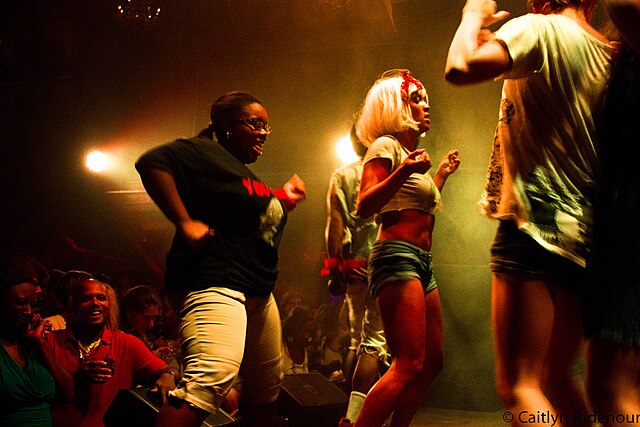
And in New Orleans, public life is not a side detail.
The bounce sound is hip-hop’s original engine: the break, the loop, the DJ
A big part of why bounce feels like “pure hip-hop” is that it is unapologetically loop-based and DJ-centered.
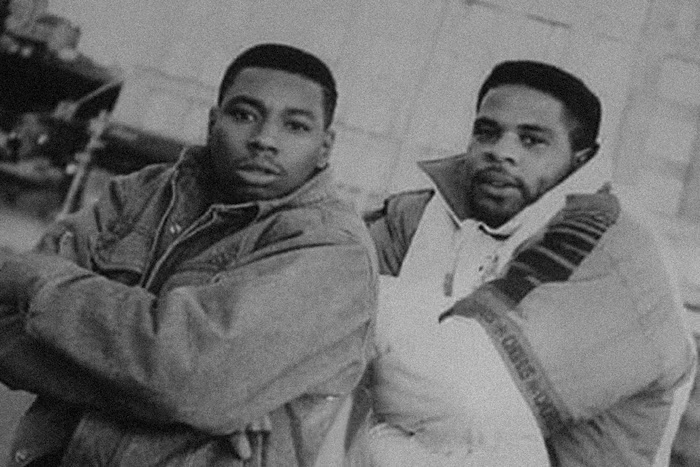
NPR’s reporting on New Orleans rap history highlights how foundational bounce is to the city’s hip-hop identity, tracing the way DJs and crews built the sound in the 1980s and how a single sample—The Showboys’ “Drag Rap”—became the “Triggerman” loop that catalyzed the bounce universe. That’s hip-hop DNA: finding a break, making it a home, then building endless variations through chops, repeats, crowd cues, and MC commands.
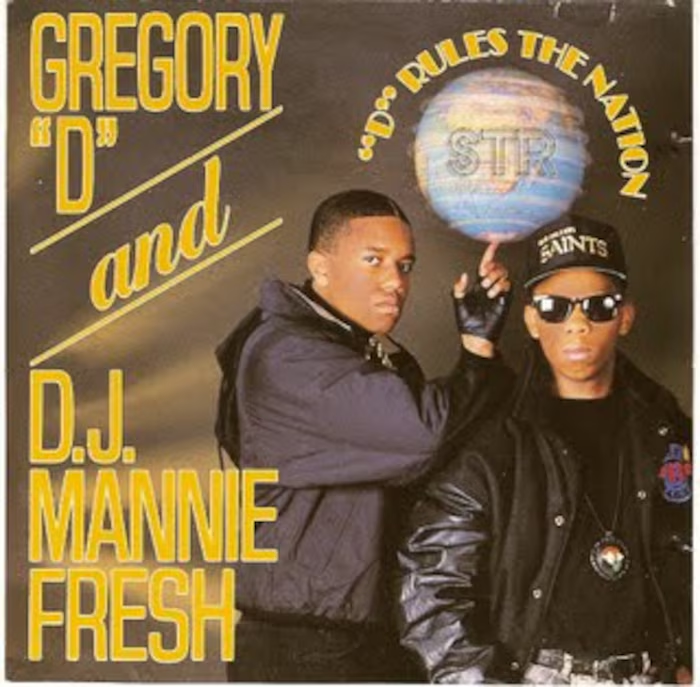
This is also why bounce scales so well. The core beat logic is simple enough to be instantly recognizable, but flexible enough to mutate forever. DJs can “stretch it, warp it, chop it,” and the crowd still knows exactly what time it is. This creates a social contract between DJ and audience.
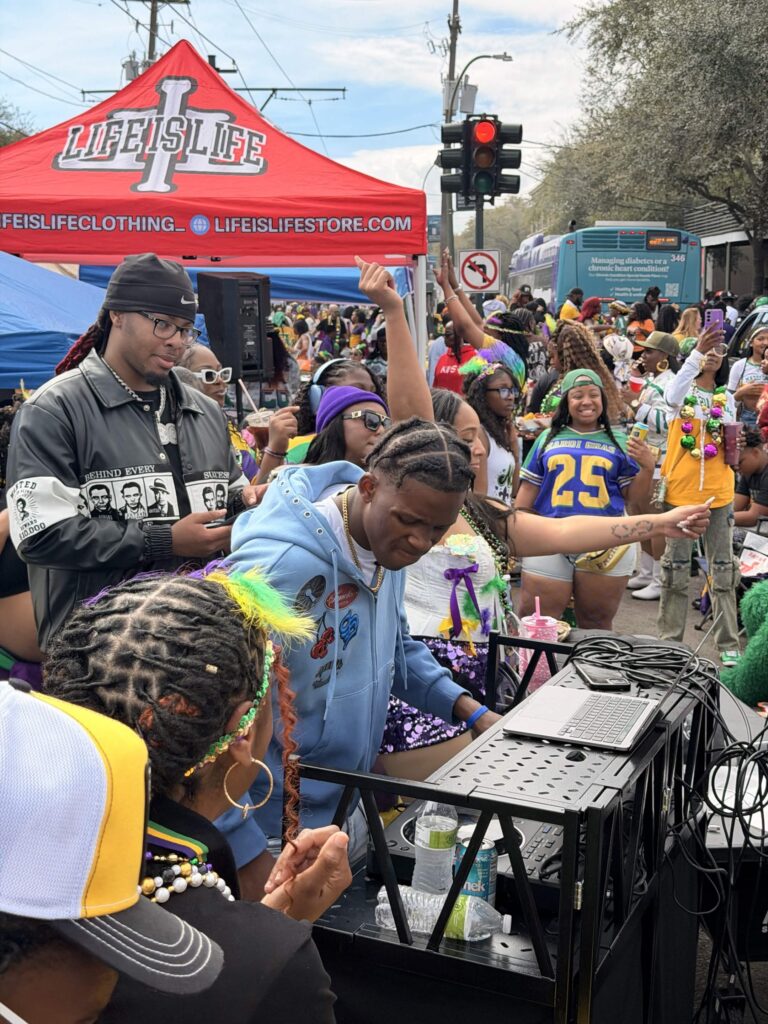
Big Freedia describes bounce as call-and-response hip-hop played over a hyper-fast beat, and makes a key point: as long as it has the Triggerman beat, it’s bounce. That statement sounds casual, but it’s profound. It means bounce is defined less by celebrity or industry validation and more by the presence of a shared rhythmic language that communities recognize immediately.
Call-and-response is not a gimmick. It’s much more than that.
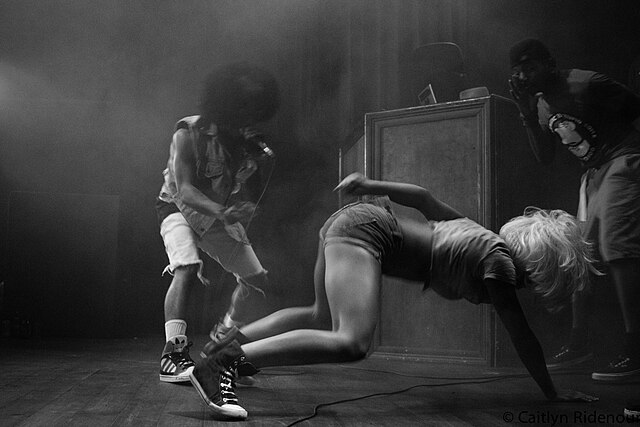
A lot of rap can be performed at an audience. Bounce is performed with an audience.
That’s not a minor stylistic choice. Call-and-response is one of the oldest communal technologies in Black music traditions in the Americas. It’s how you turn a crowd into a chorus. It’s how you distribute power. The MC is not just delivering bars; the MC is leading a congregation. The crowd shouts back because the crowd is not “consuming.” The crowd is authoring the moment.
Multiple mainstream explainers get this right, even when they simplify: bounce is recognizable for call-and-response lyrics and audience participation, anchored by the Triggerman beat. But the deeper truth is that bounce makes hip-hop’s original social purpose impossible to ignore. It insists that rap is not only about the artist’s voice. It is also about the people who answer.
That is “pure” in the sense that it is close to the source.
Why it’s blowing up now: 2026 is the year the world misses the block
So why is bounce surging in visibility again in 2026?
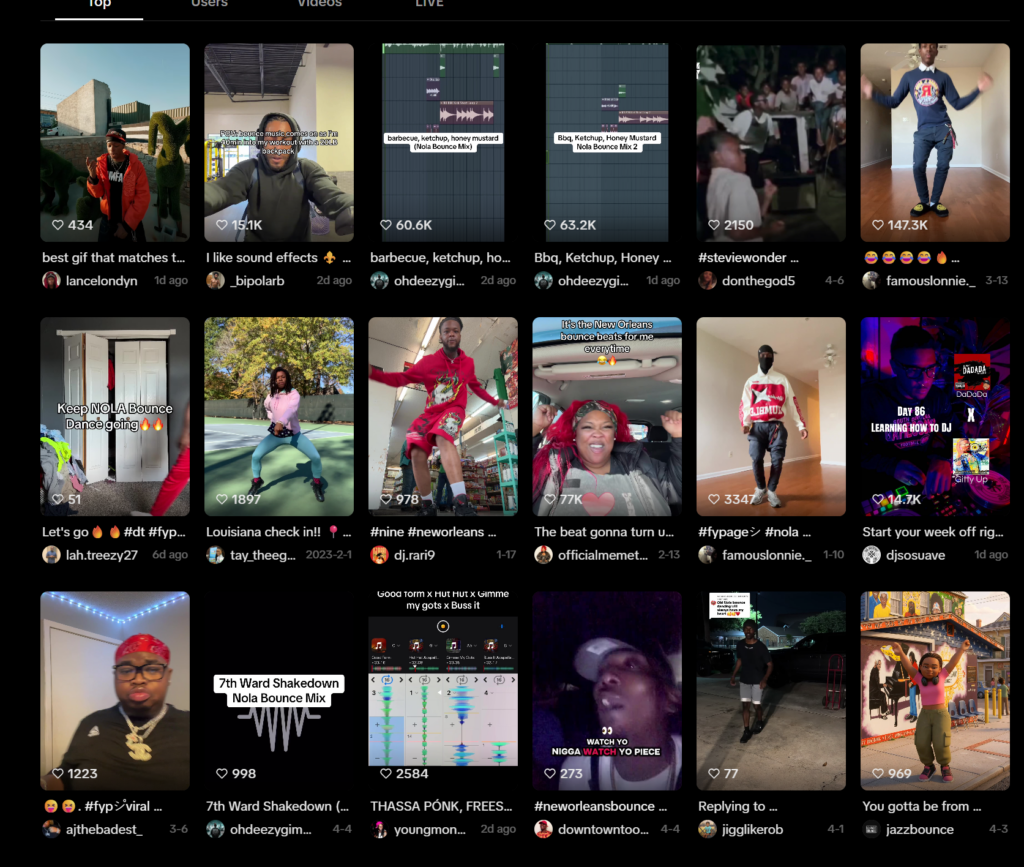
Because the last several years have trained people to live online, socialize through screens, and experience culture as content. Bounce is the opposite of that. It is body-first. Community-first. It is “you had to be there” music in an era where everything is recorded.
That tension is exactly why bounce travels. When the mainstream grabs bounce, it’s often because bounce contains something the mainstream is starving for: participatory joy.
Tourism and city-branding sources even acknowledge the mainstream pattern: bounce is a long-standing fixture of New Orleans culture, and wider audiences have encountered it via major pop and rap moments that borrow from bounce’s energy and cadence. But what people are really hearing in those borrowed moments is not just a “style.” They are hearing the sound of a crowd being led.
In 2026, when everyone is fighting for attention, bounce wins because bounce was built for attention in real time. It was designed to hold a room. Algorithms can imitate aesthetics; they struggle to imitate a living crowd.
The “open” city: New Orleans culture makes hip-hop feel public again
New Orleans is one of the few major American cities where public celebration still feels like a core civic behavior, not an exception.
That cultural posture matters. It produces a different relationship between music and place:
- Music is allowed to spill into streets, routes, and neighborhoods.
- DJs can test records on people, not just on platforms.
- Dance isn’t a “trend,” it’s an embodied local language.
- The community is not a marketing segment. It is the venue.
Hip-hop was born in an environment where community gathering was the infrastructure. Bounce still has that infrastructure. That is why it continues to generate new chants, new dances, new MC routines, and new DJ edits that make sense to the people first.
Bounce and Black resonance: not “because it’s trendy,” but because it’s familiar
Bounce doesn’t ask Black people to translate themselves into someone else’s idea of sophistication. It doesn’t require permission to be loud, sexual, funny, holy, messy, brilliant, and tender in the same song. It is not “respectable.” It is real.
And because it is real, it becomes a mirror. When people talk about “the purest form of hip-hop,” what they often mean is: the form of hip-hop that still belongs to the community that birthed it, not just to the industry that monetized it.
Purity is not about being unchanged. It’s about keeping the function.
Some people will object to the idea of “purity” because it can sound like nostalgia or gatekeeping. But there’s another way to define it:
Not “closest to 1973,” but closest to hip-hop’s original function.
By that definition, bounce makes a compelling argument:
- It is DJ-centered and loop-driven, rooted in break logic.
- It is call-and-response, meaning the audience remains part of the instrument.
- It grows from local spaces—clubs, block parties, and street culture—where dance and identity are inseparable.
- It has a documented lineage of artists and DJs building a regional sound into a lasting movement, from early pioneers to household names.
The deeper reason bounce is “pure” in 2026: it’s still a public practice
In much of the country, hip-hop became a product first and a practice second. Bounce never fully allowed that switch.
Bounce is still something people do together. It is still something a DJ can control with a hand on the fader and a read of the room. It is still something an MC can steer with a chant and a command. And it is still something a crowd can answer back to—proving that hip-hop is not only music you listen to.
It is music you participate in.
If hip-hop is a house, bounce is one of the rooms where the lights are still on, the door is still open, and the neighbors are still inside—dancing, responding, and keeping the whole thing alive.