As New Orleans prepares for another major Essence Festival weekend, the Global Black Economic Forum is using the moment to push a bigger conversation forward: what does real opportunity look like in a changing economy?
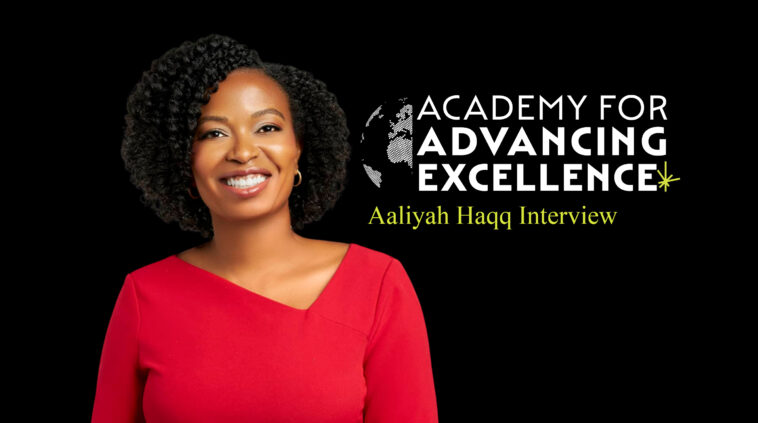
During our interview, Aaliyah Haqq of the Academy for Advancing Excellence spoke about leadership development, the future of work, and the role that coaching plays in helping professionals and organizations navigate uncertainty.
The Academy for Advancing Excellence is a global leadership development company that works across corporate training, executive coaching, leadership programming, and employee resource group support. Haqq described the organization’s work as helping companies and professionals build stronger leadership foundations, especially in environments where people are being asked to adapt quickly.
“We’re a leadership development company,” Haqq explained, noting that the Academy helps people understand leadership in practical terms — not just as a title, but as a responsibility to bring out the best in others.
For Haqq, better leadership in today’s economic and cultural climate is rooted in helping people perform at their highest level. When leaders do that well, she said, the benefits ripple across the company: workplace culture improves, people feel more supported, and the organization is positioned to perform better.
“As a leader, I’m supposed to be able to help bring out the best in everyone that I’m working with,” Haqq said during the interview.
According to Haqq, coaching gives professionals a way to get grounded. It helps people clarify what they want, understand how to move toward it, and return to their path when outside noise pulls them off course.
“Coaching fortifies you so that you can have more direction,” Haqq said. “You can have more grounding. You can have less anxiety. You can be clearer about what you want and actually how to get after it.”
The conversation also connected the Academy’s work to the larger mission of the Global Black Economic Forum. Haqq explained that GBEF’s work is organized around four future-focused pillars: the future of work, health, wealth, and democracy. The Academy’s focus sits most directly in the future of work, while also intersecting with the future of health through its emphasis on building healthier workplaces.
A major part of that work is closing the gap between talented professionals and the opportunities they are trying to reach. Haqq said that one of the biggest obstacles is awareness — knowing what opportunities exist, how systems work, and who can help guide the process.
She pointed to the importance of having a “personal board of directors,” including mentors, sponsors, and coaches who can help professionals identify goals, understand gaps, and navigate career systems that have historically excluded many people from access and information.
The Global Black Economic Forum is also bringing that mission into its Essence Festival programming. Haqq highlighted a job fair partnership with Job1 NOLA, which will bring more than 20 partners into the convention center’s Great Hall pre-function space. She also emphasized the importance of working with local talent, including Newtral Groundz, photographers, and videographers, as part of a more intentional approach to community engagement during Essence Festival.
Haqq said GBEF has heard past criticism about major Essence events not always partnering deeply enough with people in New Orleans. This year, she said, the organization is taking that feedback seriously by building local partnerships into the work.
For attendees, Haqq said the goal is for people to leave with more awareness, more knowledge, and a clearer sense of how to integrate conversations around work, wealth, health, and democracy into their daily lives.
The interview also touched on transferable skills, especially for people coming out of hospitality or service-based industries. Haqq discussed how customer service, communication, and the ability to anticipate human needs can translate into careers in sales, human resources, leadership, and other professional spaces.
When asked what skills people need to prepare for the workforce in 2026, Haqq pointed to critical thinking. While technical skills and AI tools remain important, she stressed that people must still know how to think, ask better questions, and solve problems creatively.
AI, she noted, is only as strong as the inputs it receives. Human beings, however, have the ability to reason, reflect, and imagine solutions beyond what a tool can generate on its own.
Her advice for people preparing for future opportunities was simple but powerful: get clear about what you actually want. Haqq said many people limit themselves based on what they have seen, what society has normalized, or what they believe is realistic. She encouraged people to give themselves permission to name their true goals and pursue them with confidence.
As Essence Festival brings thousands of people to New Orleans, Haqq’s message is timely. The future of work is not just about jobs or technology. It is about access, awareness, leadership, and the support systems people need to move forward.
Through the Academy for Advancing Excellence and the Global Black Economic Forum, Haqq is helping shape a conversation that goes beyond the stage — one focused on building healthier workplaces, stronger leaders, and more prepared professionals for the future ahead.